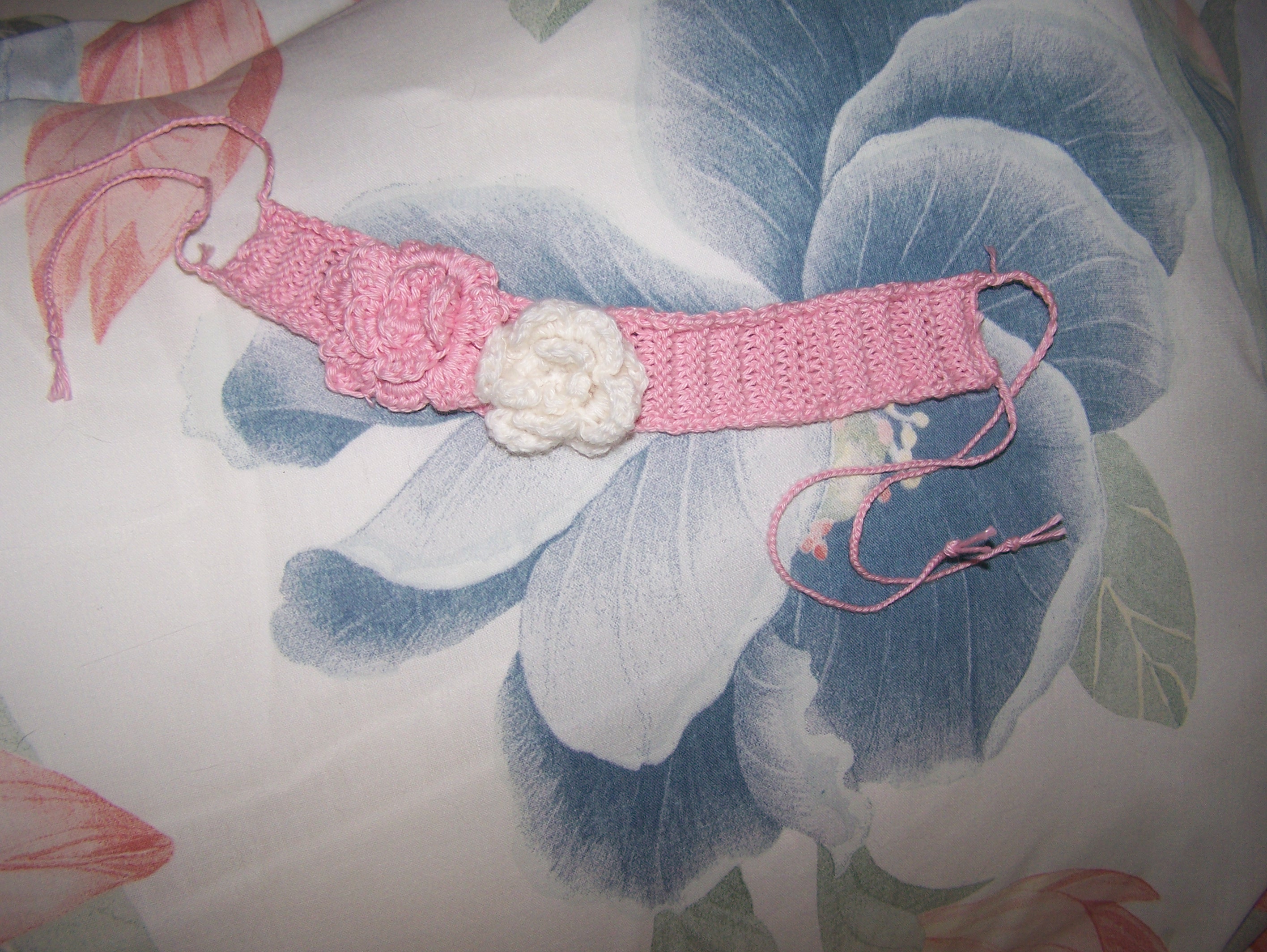
2011-01 Baby Headband with Flowers

I made this headband to go along with the baby dress I made for a baby. The dress is supposed to fit a 6-12 month baby and given that I have absolutely no idea how big a baby’s head is, I decided to improvise. With some prodding from coworkers and advice about making it able to tie (her baby girl had a big head) I created this.

The baby head band below is worked with Lyndon Hill yarn by Bristol Yarn Gallery on size 1 needles. You can adjust the gauge for the size desired.  The flowers are created using the technique described on The Art of Crochet by Teresa’s blog http://crochet-mania.blogspot.com/2009/07/slinky-crochet-flower.html

Gauge: 8 stitches = 1 inch 10 rows = 1 inch

Cast on 16 stitches

Row 1: Knit

Row 2: Purl

Row 3: K2 P12 K2

Row 4: P2 K12 P2

Continue this pattern for about 10 inches. Bind off. Take three pieces of yarn approximately 10 inches in length. Tie them to the corner of headband. Braid until about 5-6 inches long. Each side should have two braided edges. Tie off and weave in ends.

Create crocheted flowers as described in http://crochet-mania.blogspot.com/2009/07/slinky-crochet-flower.html. Sew them to the top of headband.

Put on adorable baby girl!

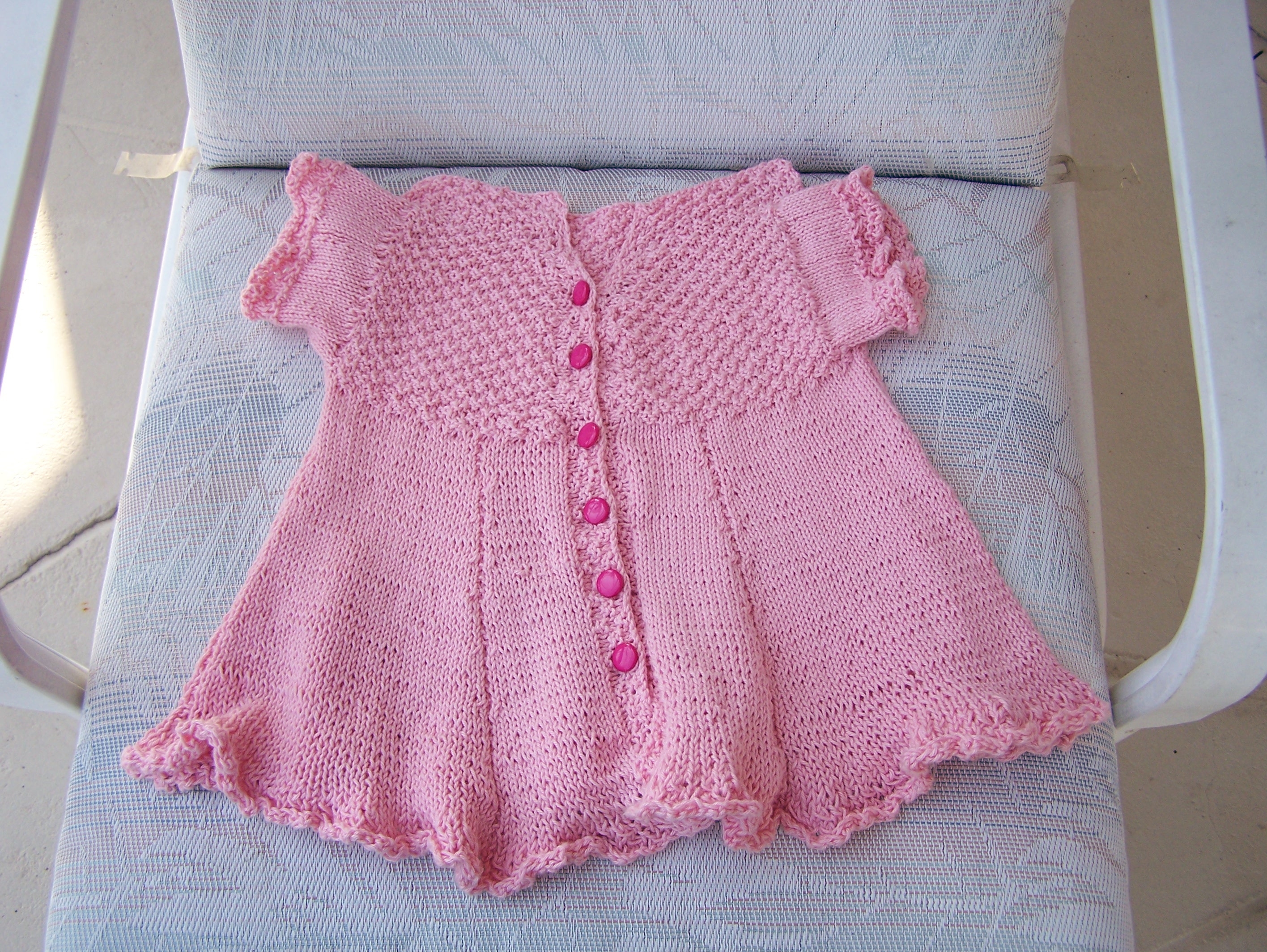
Baby Dress

After a month and a half’s work, that include a complete frogging because I didn’t know how to purl correctly, the baby dress is complete. I believe this is one of the best things I have ever made.  This pattern is named Baby Dress by Jo Lynne Murchland and I used Lyndon Hill yarn from Bristol Yarn Gallery. It took a little over 2 skeins to complete. The yarn is 85% cotton and 15% silk leaving the dress soft and perfect for hot summer days. It’s a great project for prospective mothers, aunts, grandmothers or just friend. I just wish that the few holes I made would disappear. I never seem to be able to finish a project without leaving at least one mistake visible. I guess it is part of learning. Happy Knitting.

Baby Dress In Progress

Sorry for the long period of inactivity but I am really busy with school and work. I hardly have time to myself any more. I’m still working on the baby dress, although it is taking longer than it normally would. Since I found out that I’ve been purling incorrectly my entire life, I’ve restarted the baby dress and I’m now about 80% finished. I look forward to finishing it and sending it out. Too bad I can’t shrink myself and wear it. It is going to come out fabulous. I love knitting baby things. It’s like they were created just for knitting. Or is it the other way around. Unfortunately with my lack on time, it is being worked on during lunch breaks and in the few minutes I spend each night in bed before sleep hits (or in my case before I decide to put my head on the pillow and wish for sleep.) I can’t wait to show pictures.

Purling

I consider myself an experienced knitter. I have been doing it for over ten years now. I like cabling, know various stitch patterns and have done limited lace work. So I was surprised to find out that I’ve been purling incorrectly this whole time. I think this comes from teaching myself to knit in the pre-youtube age. I thought purling was just pulling the yarn through the back of the knit stitch. Apparently not. That is how you twist the stitches. Purling is a little more complicated than that. You actually have to wind the yarn around the needle and then pull it through the loop.

http://www.youtube.com/watch?v=MAMD_XpybQY

But I know none of you out there have this problem. We all have the internet and we all know youtube is a knitter’s best friend.

Foot Fetish

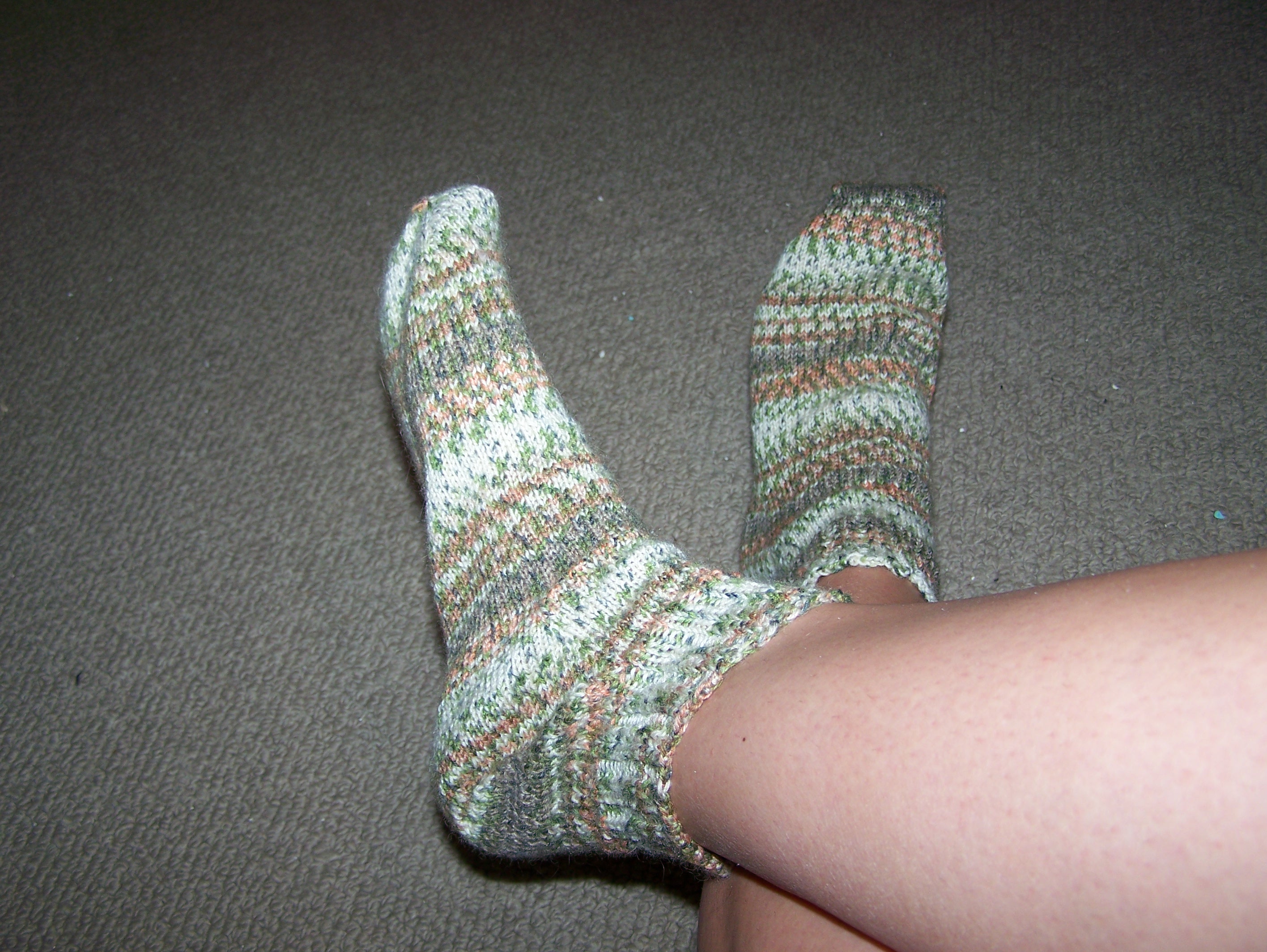
So I’ve been on a foot related knitting spree lately. For Christmas, I made my Grandmother a pair of slippers, followed by a pair of socks for myself and now I finished a pair of socks for my husband just in time for his birthday, which is today. They’ll be ready for him when he finally gets home. These are made out of a yarn my friend bought me when she visited Sweden and are soft and comfortable. I’d love to tell you what they are made of but the label is not in English. These socks took forever with my tiny size 1 knitting needles but they are finally ready for wear. Oh and hubby, if you are reading this, do NOT throw these in the washing machine.

Sweater Wear

For most of you in the Northern areas of the country, sweater season has arrived in full force. My family and friends in New York are repeatedly getting walloped by the unrelenting weather. Even here in Southwestern Florida, I am getting the sweater itch. By itch, I mean the want to knit not the want to wear itchy old-fashioned sweaters your grandmother used to give you for your birthday.

I am probably the last person who should give advice on knitting sweaters. I have made a total of one bolero and one shirt. My lovely shirt came out wide and short and I wouldn’t be caught dead wearing it. When they say that gauge is important, GAUGE is Important. Think of spending your hard-earned money on this wonderful skeins of yarns, putting hours and hours of time into it and then standing in the mirror horror-struck (and in tears like me.) But don’t let that stop you. We all learn in different ways and the only way we get better is from learning from our mistakes.

I flip through patterns constantly and my latest favorite is Custom Knits by Wendy Bernard. The author also writes a blog http://www.knitandtonic.net/ 

I love her book because it doesn’t just give you patterns, but explains the way sweaters are knit, how they look, the way they are designed and how you can create what looks best on you. I want to try everything immediately. I highly recommend any knitter who is interested in making sweaters, shells, or any other clothing item to read this book! It can only help in later projects.

Sunday Afternoon

It’s Sunday afternoon and after a busy week, I’m sitting on my couch with a sleeping cat curled up beside me. I have two chapters to read and outline as well as a group project to e-mail my group members about. I have phone calls to make, laundry to check on, vacuuming to be done and dinner to make. The week has flown by in a mass of to do’s. I have spent over a week working on a sock which I’m finally at the heel. I love the yarn but I’m using size 1 needles doing two rounds at a time in periods of five to fifteen minutes that I can find through out the day. If only I could knit while on the treadmill or elliptical but I have a feeling that experiment would end in a trip to the emergency room and a messy stab wound. I like sharp knitting needles. I spend dinner time talking to the hubby while flipping through knitting books and magazines that are conveniently layed out on the table. Life is busy, even on a Sunday afternoon but knitting is an addiction that can fit into even the busiest of schedules.

New Year Resolutions 2011

January 1st is a day of celebration, reflection and reconsideration. Most people tend to create resolutions that are unrealistic or unobtainable such as quitting smoking, losing weight, or saving more. Those resolutions are generally forgotten by January 3rd.

This New Years, I’m creating a few realistic resolutions for myself. These are the craft related ones which I will share.

1. Learn how to spin. I received a beautiful Kromski Sonata spinning wheel from my mother for Christmas and am having a blast learning how to spin on it.

2. Knit a pair of socks. My favorite wool socks went through the dryer and sadly no longer fit. I need a replacement pair made yesterday.

3. Learn more lace patterns. I have a tendency to avoid these patterns because I have trouble following the intricate instructions.

I have many more things that I want done in the year to come, but I think these three are my top yarn related goals to reach. Have a happy, healthy, and prosperous 2011!

Thanksgiving, History & Thoughts

Thanksgiving is a day of showing gratitude, of family and of eating. It is also a day of reflecting on the past. We celebrate two cultures coming together and sharing a bountiful harvest. America is built on that ideal of plenty. Many will gather whether in front of the family table or in restaurants through out the country but so many are less fortunate, especially recently. Be grateful for what you have and remember those who have less.

Aside from that, Thanksgiving is about the past and I was just flipping through the latest Interweave Knits magazine, I came across an article Taking Flight by Bethany Lyttle. The article remarks on a mill in New England. It is about Pam Allen who created a yarn company, Quince & Co. The article was intriguing but it made me think about the history of knitting and how much we’ve changed.

Knitting is about creation, now and then. Most knitters know that it is actually less expensive and time-consuming to run into the local Wal-mart and pick up a $1 pair of gloves then to put the hours, the attention and the more pricey yarn into a pair of homemade gloves. Yet, once upon a time, this was a necessity. Can you imagine the pilgrim’s knitting socks and gloves to keep warm in the cold Northeast winter? Did they have sheep around so that they could create their own yarn to make into protective clothing? Of course. My closet would be a lot smaller if I was required to hand make everything for my family!!

On that note, I am going to watch a movie and knit a pillow for my Grandmother. Happy Thanksgiving.

2010-10 Bird’s Eye Slippers

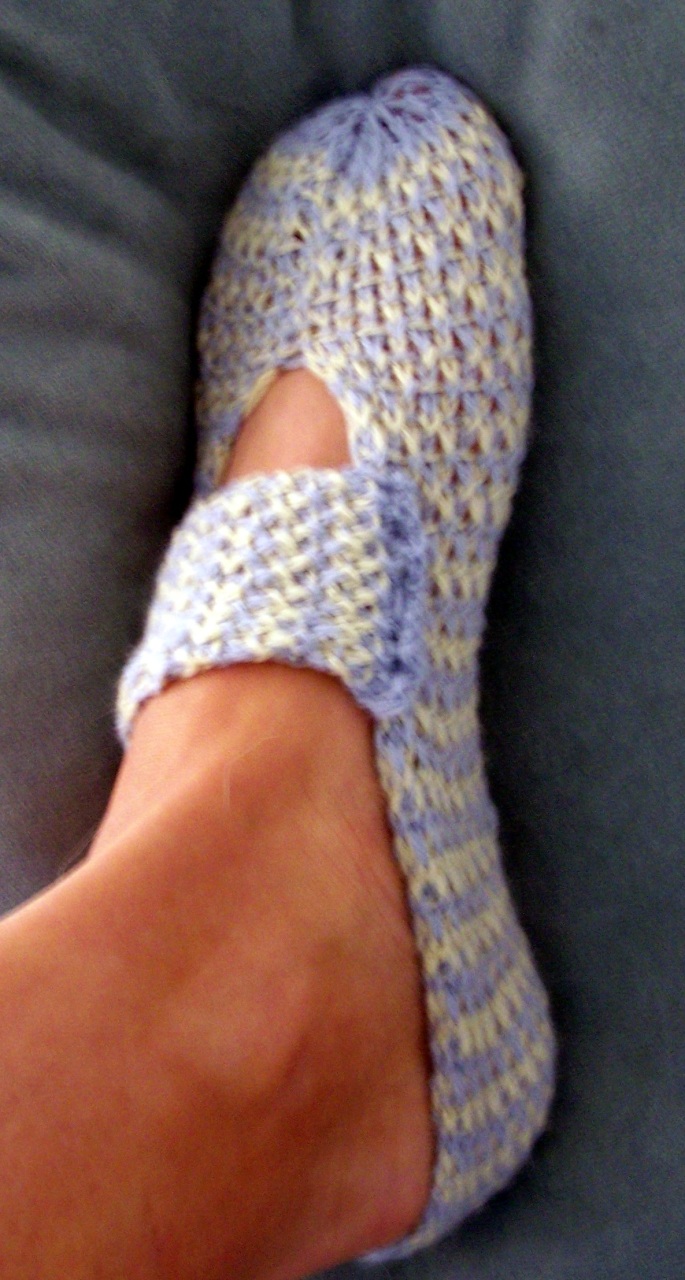
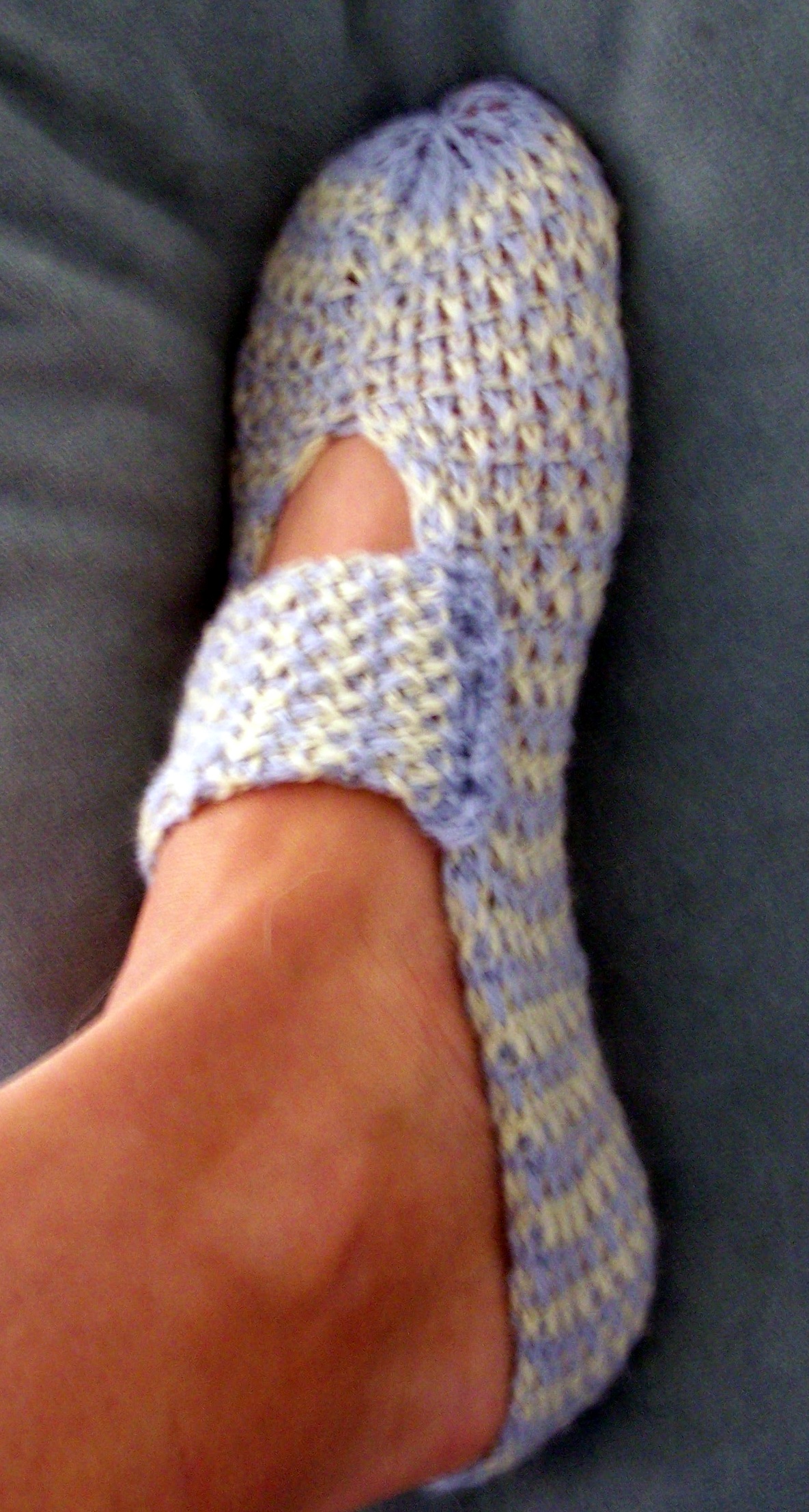
 Grandma’s Christmas present is finished. I wanted to make a felted pair of slippers but didn’t find anything I really wanted to make online. I saw different patterns that were similar and decided to try this on my own. I am working off of a simpler pattern that didn’t include the band across the top of the slipper and was knit in garter stitch.   

The finished slipper are a bit too small for me because while my Grandmother’s feet are about a size 7, mine are at least an 8 1/2. If done correctly, these shouldn’t be quite so stretched.   

I used size 3 needles with a 4 ply fingering yarn (Sidar Snuggly 4 ply) which is 55% nylon and 45% acrylic.   

8 stitches x 8 rows = 1 inch   

Foot   

Cast on 44 stitches in A   

Row 1: With A, S1,K1 to end (Slip all stitches purl wise)   

Row 2: With A, Purl   

Row 3: With B, K1,S1 to end   

Row 4: With B Purl   

Continue this pattern about length of foot. Slipper will stretch so make it shorter than foot.   

End with an A row   


Slip needle through remaining stitches


Next Row: K2 Tog, repeat till end   

Next Row: P2 Tog, repeat till end   

Pull needle through remaining stitches and keep this tight. This will be the toe section and if loose, the toes will stick through the front.   

Pull stitches tightly. If loose, toes will stick through this section.


With right sides together, seam together both ends for about an inch and a half. Reinforce toe area.


With right sides together, seam together both ends for about an inch and a half. Reinforce toe area.   

With right sides together, seam together heel area.   


Band   

Cast on 16 stitches with color A   

Continue rows 1-4 for approximately 2 inches   

Bind off.   

With right sides together, sew the band to the edge of slipper as in picture. It should be about 1 ½ inches from toe seam edge.   

Flip slipper so that the right side is on the outside.   

Sew other  edge of band to other side of foot, about 1/4 inch from edge.   

With right sides together, sew together band and side of slipper.


Sew band onto top of slipper approximately 1/4 inch from edge. Right side should be flipped outward (like you would wear it.)


These were made for my grandmother who has size 7 feet and I have size 8.5. They are purposely made small and are tight on my feet in the pictures.   


I am asking that if you enjoy this pattern or use it, please donate to me on Ravelry. I have this listed for sale for $0.50. I have been and will continue to share my original patterns through my website but would appreciate a small contribution.  

http://www.ravelry.com/patterns/library/2010-10-birds-eye-slippers  


Thank you,  

Tracy 

2010-09 Cabled Pillow #4

I love cables and decided to make a few little things with yarn I already have in stock. These pillows make great gifts and are a lovely simple adornment to any home.

I used Caron Simply Soft yarn and size 5 needles. The gauge is 5 stitches and 6 rows = 1 inch in stockinette stitch, creating a pillow that is about 10 x 10 inches in size stuffed.

Front:

Cast on 50 stitches

Row1 Knit

Row 2 Purl

Row 3 K4 P4 P5 (C4F P2)twice C4F P5 P6 K10

Row 4 P10 K6 K5 (P4 K2)twice P4 K5 P4 K4

Row 5 K4 P4 P4 (T3B T3F)3 times P4 P6 K10

Row 6 P10 K6 K4 P2 (K2 P4)twice K2 P2 K4 P4 K4

Row 7 K4 P4 P3 T3B (P2 C4B)twice P2 T3F P3 P6 K10

Row 8 P10 K6 K3 P2 K3 P4 K2 P4 K3 P2 K3 P4 K4

Row 9 K4 P4 P2 (T3B T3F)twice P2 T3F P2 P6 K10

Row 10 P10 K6 K2 P2 K3 P2 K2 P4 K2 P2 K3 P2 K2 P4 K4

Row 11 K4 P4 P1 (T3B P2)twice C4F (P2 T3F)twice P1 P6 K10

Row 12 P10 K6 K1 (P2 K3)twice P4 (K3 P2)twice K1 P4 K4

Row 13 K4 P4 (T3B P2)twice T3B (T3F P2)twice T3F P6 K10

Row 14 P10 K6 (P2 K3)twice P2 K2 (P2 K3)twice P2 P4 K4

Row 15 K4 P4 (K2 P3)twice K2 P2 (K2 P3)twice K2 P6 K10

Row 16 as Row 14

Row 17 K4 P4 (T3F P2)twice T3F (T3B P2)twice T3B P6 K10

Row 18 as Row 12

Row 19 K4 P4 P1 (T3F P2)twice C4F (P2 T3B)twice P1 P6 K10

Row 20 As Row 10

Row 21 K4 P4 (P2 T3F)twice T3B T3F (T3B P2)twice P6 K10

Row 22 As Row 8

Row 23 K4 P4 P3 T3F (P2 C4B)twice P2 T3B P3 P6 K10

Row 24 As Row 6

Row 25 K4 P4 P4 (T3F T3B)3 times P4 P6 K10

Row 26 As Row 4

 Repeat Rows 3-26 again

Row 51 Knit

Row 52 Purl

Bind off

Back:

Cast on 48 stitches

Row 1-26: K24 P24

Row 27-52: P24 K24

Bind off

With right sides together, sew together the edges of the pillow. Leave about a 2-3 inch opening. Turn pillow so that right sides are facing out, stuff with fiber fill of your choice and seam together 2-3 inch opening. Using Caron Simply Soft yarn and size five needles, this creates a 10×10 inch pillow.

C4B : Cable 4 Back Slip 2 stitches onto cable needle, hold to back of work. Knit next 2 stitches from left needle. Knit 2 stitches from cable.

C4F: Cable 4 Forward Slip 2 stitches onto cable needle, hold to front of work. Knit 2 stitches from left needle, knit 2 stitches from cable needle.

T3B: Twist 3 Back Slip 1 stitch onto cable needle, hold to back of work. Knit 2 stitches from left needle, purl stitch from cable needle.

T3F: Twist 3 Forward Slip 2 stitch onto cable needle, hold to front of work. Purl 1 stitches from left needle, knit 2 stitches from cable needle.
Work In Progress

Spoiler alert: presents for family members are listed below. If you are related to me, get off this post!

So, I’ve finally began knitting again. I have the front cover of a new pillow done. I’ll complete the back, stuff it and take a bunch of pictures. Then I’ll be able to post a new pattern. The cables look great and someone will have a great Christmas present. Once that is complete, I’ll be on to more projects:

Felted slippers for Grandma

Felted Purse for Mom with Snowflake theme

Knitted “Nap Sacque” for someone’s baby

I have a few other ideas, but these are my definite to-do’s.

Unaccomplished

Well, two weeks ago I set up my Etsy shop. http://www.etsy.com/shop/knitwerks After checking it two, three, four, nine times a day, I’ve fallen into a slump. I’ve accomplished nothing after getting everything set up and posted on there. I currently have, half a carrot knit, a too too small wedding garter, another wedding garter ripped several times over, and three rows of a pillow. I’m lost and brain dead. Work has been crazy, school is time consuming, and my mind has gone to that place where the static on tv is soothing. Christmas is coming and I really need to get moving. I need original ideas but how do you get them when your brain is on autopilot? I’d really love to know. . .

Amigurumi Knits

About two weeks ago I discovered a book at my local library and I’ve been working on small projects ever since. First of all, Amigurumi is:

  • Amigurumi (編みぐるみ?, lit. knitted stuffed toy) is the Japanese art of knitting or crocheting small stuffed animals and anthropomorphic creatures. The word is derived from a combination of the Japanese words ami, meaning crocheted or knitted, and nuigurumi, meaning stuffed doll.[1] Amigurumi are typically animals, but can include artistic renderings or inanimate objects endowed with anthropomorphic features. http://en.wikipedia.org/wiki/Amigurumi

The book Amigurumi Knits by Hansi Singh includes everything from fruits and vegetables to sea creatures to backyard bugs. The first pattern is of an aubergine (eggplant) which is good for beginners. The patterns are complex, but I didn’t have a problem following them as long as no one around began a complicated conversation while I was counting (two. . . three. . . four. . . five . . . what did you say?)

The beginning of the book has good step by step instructions for the different styles of increases and decreases, the wrap and turn that the author describes as a way of creating short rows without leaving wholes, and other knitting techniques used in the patterns. It’s a great way to learn more about knitting, creating fun and adorable objects that everyone will coo over. Don’t be surprised if you get a few requests as well.

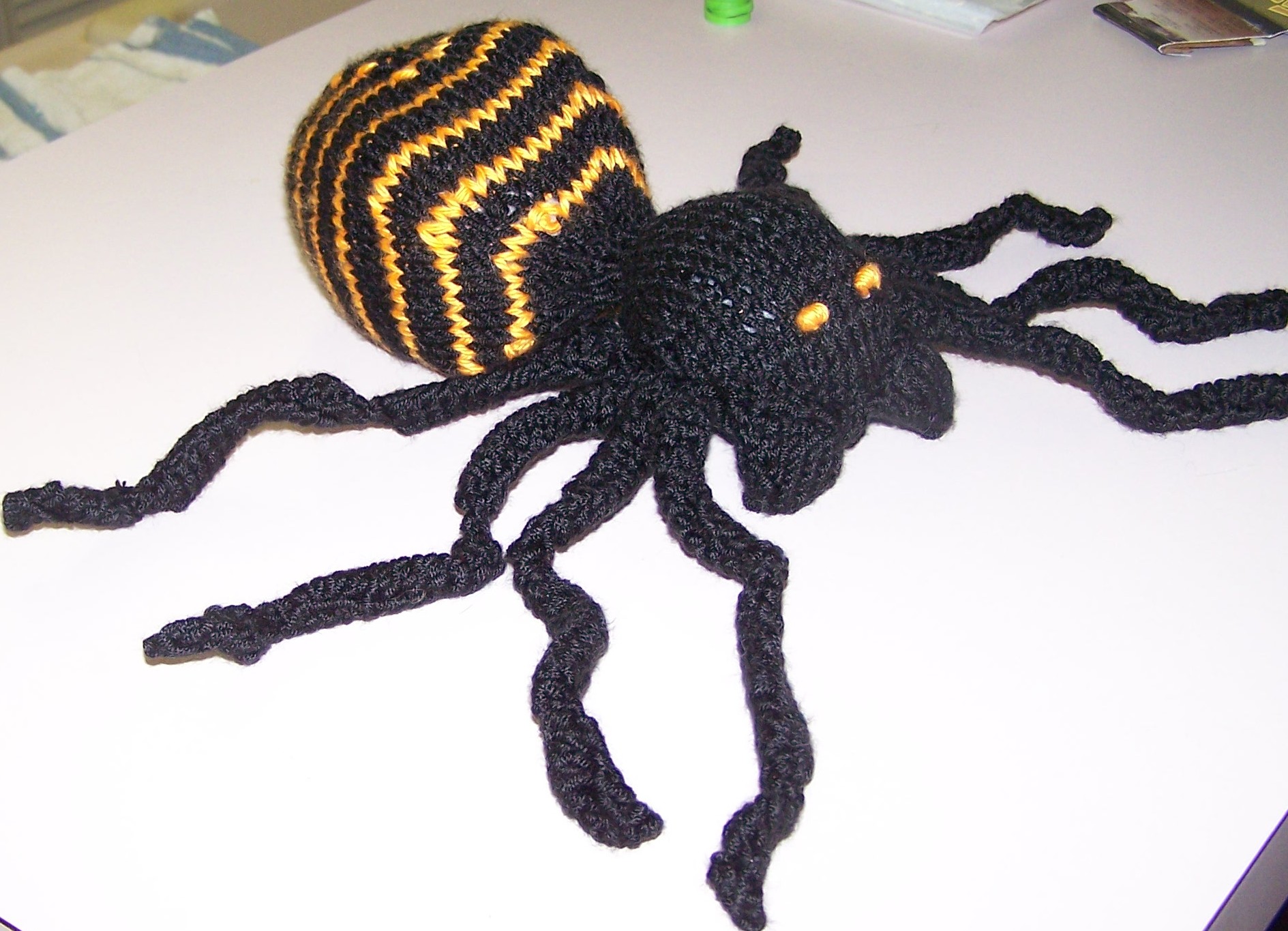
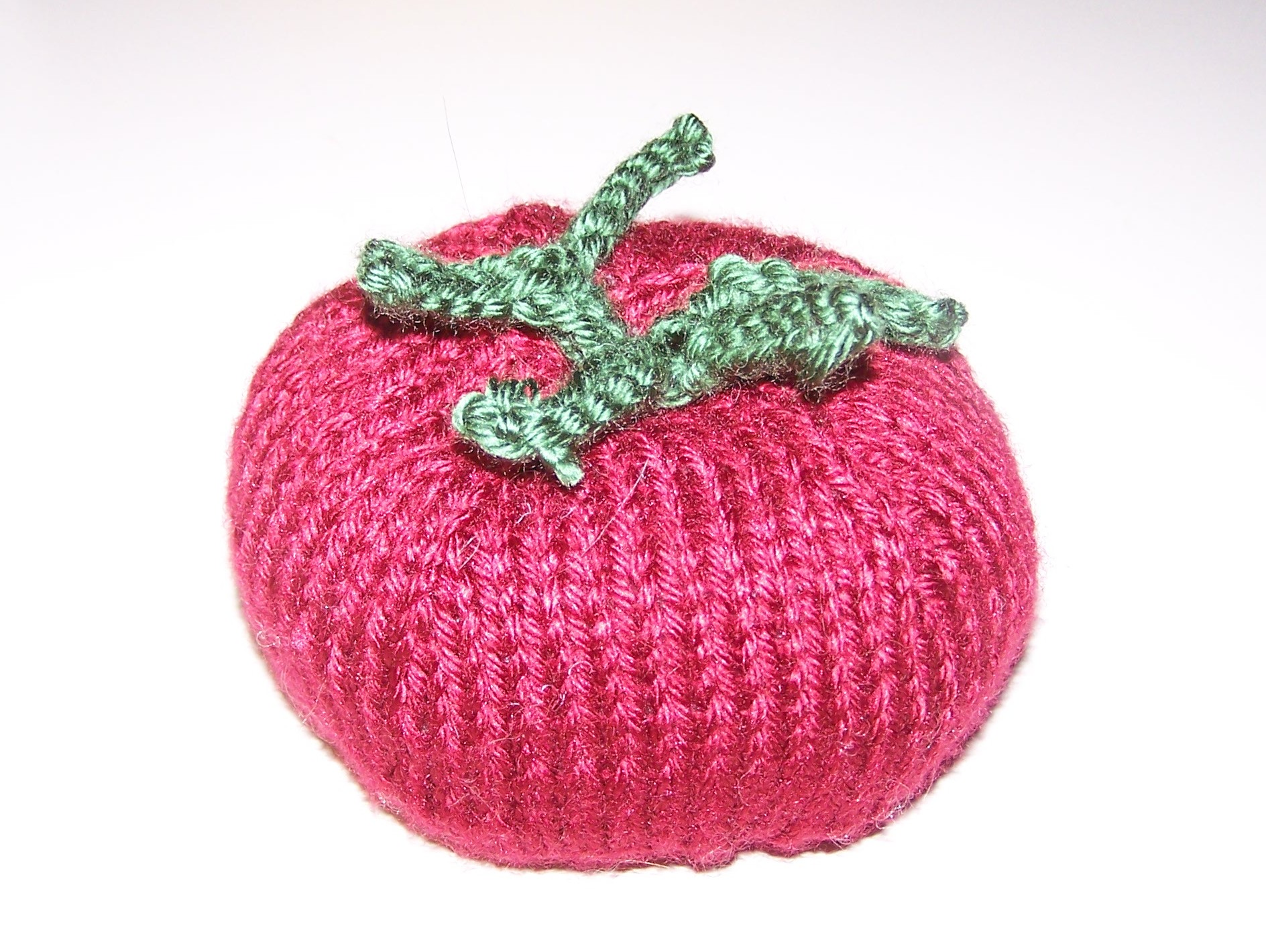
I finished the spider and keep in by my desk at work. I get at least one comment a day on it. The tomato came out great and I’m working on the carrot now. I can’t wait to make myself a Jelly Fish with the tentacles hanging down. I think it would even make a good baby mobile. Anyone else agree?

I also use Caron Simply Soft yarn because it is inexpensive and comes in so many colors. I look forward to eventually using Cascade 220 or another fancier yarn, but for now acrylic it is!

Florida Fiber In 2010

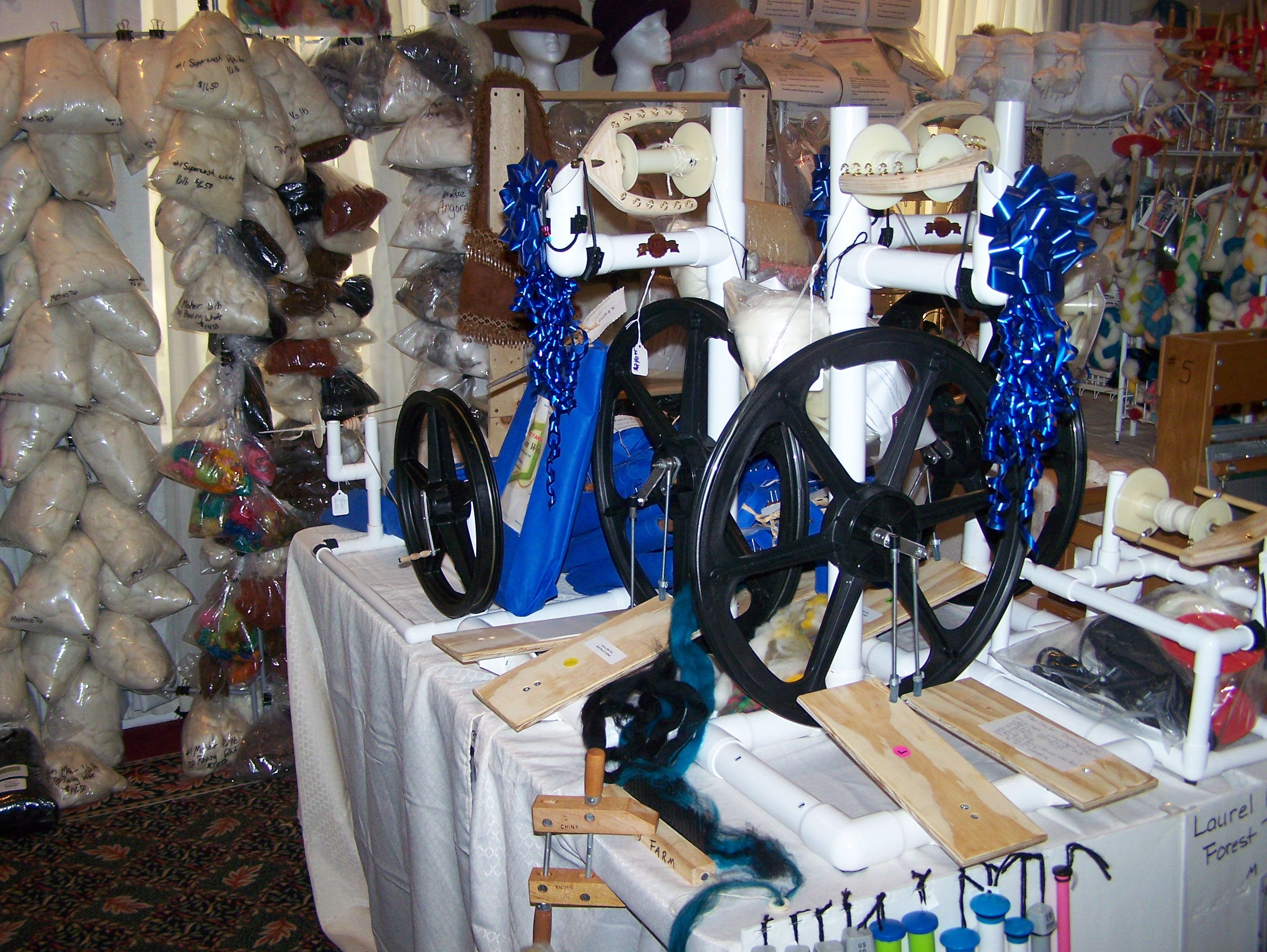
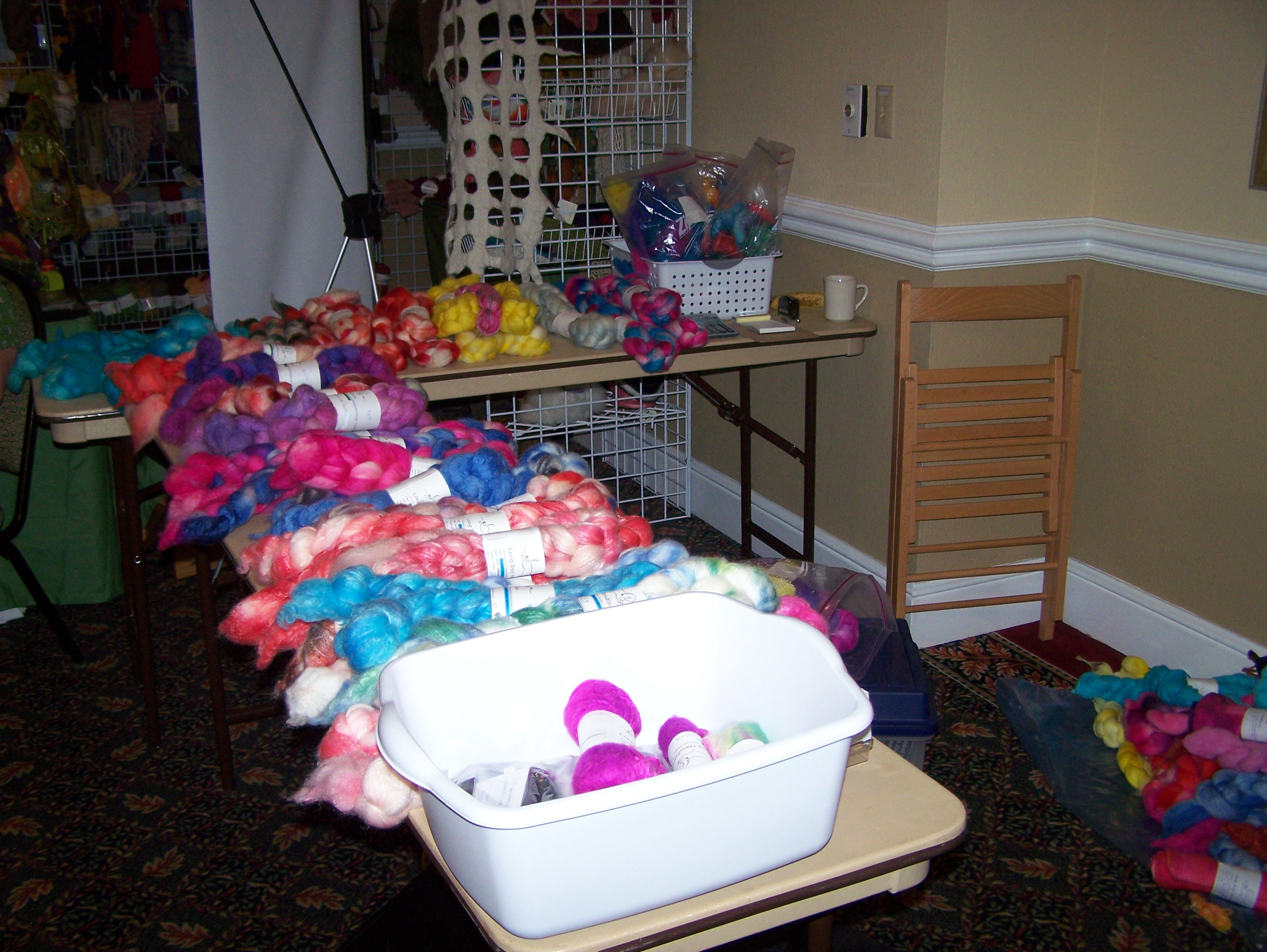
This weekend was the seventh annual Florida Fiber In which took place in Orlando this year. It began Friday night with knitting, spinning, crocheting and socializing. We arrived Saturday at around eleven am and sadly I got there just after the spindling demo had already begun. I had two main objectives for the weekend.

1- I was determined to learn how to use a spindle. A spindle is generally a long thin cylindrical object that looks similar to a top. It is used to create yarn from fibers such as wool, alpaca, linen or if you are really talented silk. A website that I like to visit is http://www.joyofhandspinning.com/HowToDropspin.shtml

2- Find someone who would let me use their spinning wheel.

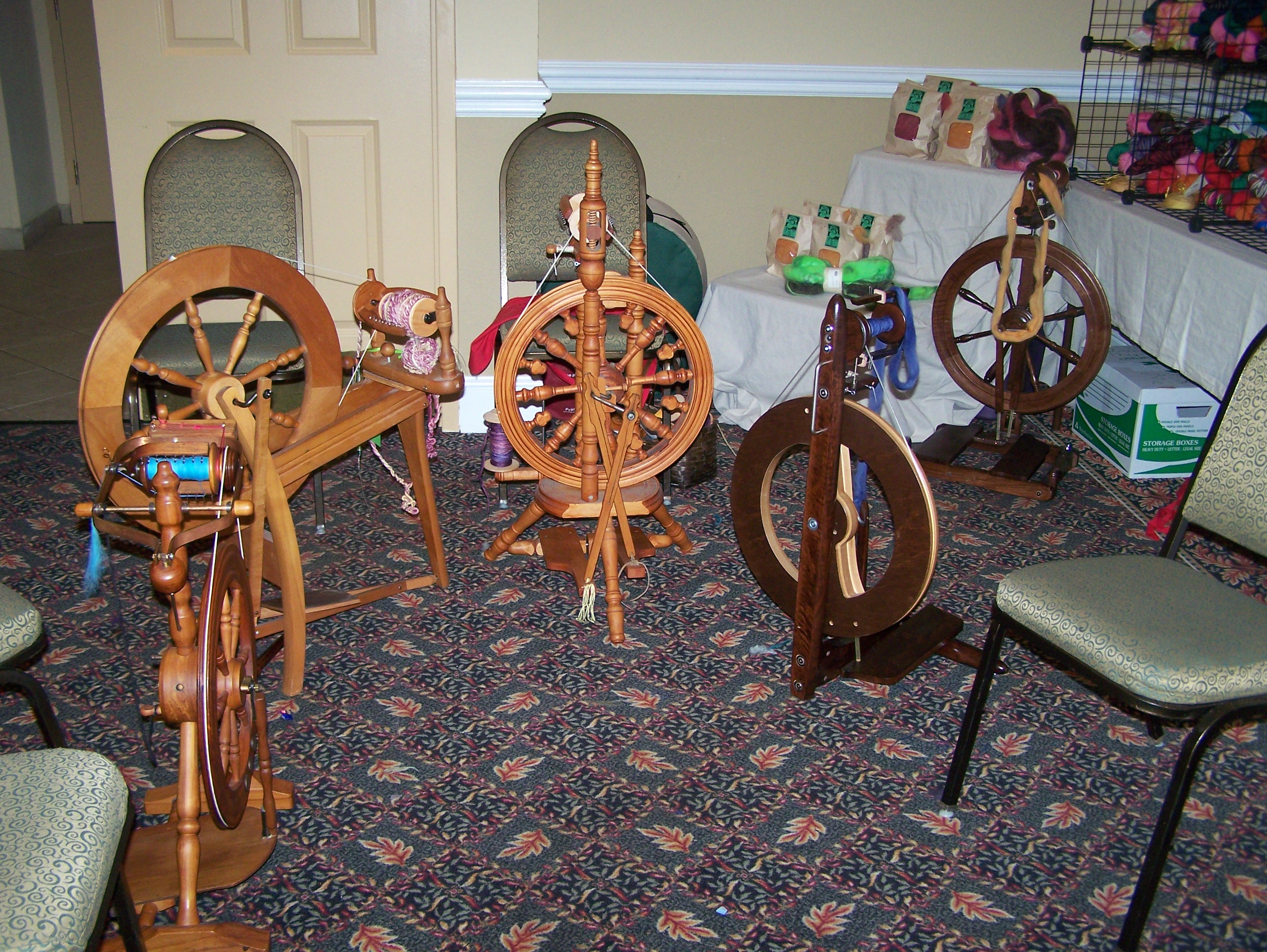
Both missions were accomplished. I practiced with the drop spindle. I was warned that it takes a lot of practice before you can create anything resembling yarn. I did enjoy using the spinning wheel, although I couldn’t really control the twist. I hope to be able to practice more at some point in my life, with my own wheel of course. It is not as easy as it looks though.

All in all, it was great to go and hang out with people who like the same things. There were many people, women especially, knitting, crocheting, spinning and spindling. I got to see a lot of different devices, fibers and people. It’s always great to learn new things and to meet new friends.